
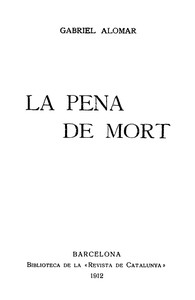
La pena de mort by Gabriel Alomar
Gabriel Alomar's La pena de mort (The Death Penalty) is a tense, philosophical novel set against the backdrop of a legal execution. Written in the early 20th century, it feels startlingly current in its concerns.
The Story
The plot follows the final hours before an execution. We see the condemned man in his cell, grappling with his fate. But Alomar doesn't stop there. He pulls the camera back to show us everyone else involved: the judge who handed down the sentence, the jury members trying to sleep at night, the prison guards carrying out the duty, and the ordinary citizens debating the case in cafes. The book isn't a whodunit mystery; the crime is almost secondary. The real suspense comes from watching the clock tick down and wondering if anyone in this chain of responsibility will break, or if the cold machinery of the state will simply complete its grim task.
Why You Should Read It
What got me was how personal it all feels. Alomar gets inside the heads of so many characters, and not one of them comes out looking purely heroic or villainous. They're just people caught in a terrible system. You feel the judge's doubt, the guard's numb routine, and the crushing fear of the man at the center of it all. It made me question my own beliefs. It's easy to have an abstract opinion about capital punishment; it's much harder when you're forced to walk in the shoes of everyone involved. The writing is clear and direct, which makes the emotional weight even heavier.
Final Verdict
This book is perfect for readers who love stories that challenge them and spark deep conversation. It's not a light, escapist read—it's a compelling, sobering one. If you enjoyed the moral dilemmas in books like Crime and Punishment or the societal focus of a writer like Upton Sinclair, you'll find a lot to admire here. La pena de mort is a brilliant, forgotten gem that asks the biggest questions about justice, compassion, and what we allow our governments to do in our name.
You are viewing a work that belongs to the global public domain. Preserving history for future generations.







James Davis
11 months agoThe analytical framework presented is both innovative and robust.