
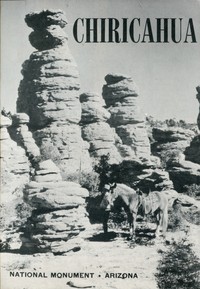
Chiricahua National Monument (1958) by United States. National Park Service
Don't let the dry, official title fool you. Chiricahua National Monument (1958) is a time capsule of mid-century science writing, packed with awe for the natural world. Published by the U.S. National Park Service, this slim guidebook aims to be your companion to one of Arizona's most surreal landscapes.
The Story
There isn't a plot in the traditional sense, but there is a fantastic narrative. The 'story' is the 27-million-year saga of the Chiricahua Mountains. The book starts with a violent, explosive beginning—a massive volcanic eruption that blanketed the area in hot ash and pumice. Then, the real sculpting begins. The guide acts as your interpreter, explaining how countless seasons of freezing, thawing, wind, and water carved that soft volcanic rock into the famous 'standing-up rocks.' It points out the key 'characters' in the landscape: the delicate pinnacles, the arches, and the deep, narrow canyons. It also introduces the human history, touching on the Apache people who called this place home and the later settlers who saw its value. The journey moves from the monument's creation story right up to the practicalities of the 1950s-era hiking trails you could explore.
Why You Should Read It
I love this book for its clarity and its palpable sense of wonder. It takes complex geology and makes it accessible without dumbing it down. You get a real sense of the immense scale of time involved. One paragraph you're reading about a cataclysm that dwarfed any human event, and the next, it's pointing out how a single raindrop helps shape a canyon. It's humbling. There's also a charming, vintage quality to the prose and the black-and-white photos that makes you feel like you're planning a road trip in a classic Chevrolet. It reminds you that the drive to understand and preserve wild places has been a part of our culture for a long time.
Final Verdict
This is a perfect read for curious minds who enjoy history, science, or travel. It's ideal for road trip planners dreaming of the Southwest, amateur geology enthusiasts who want a clear case study, or national park fans who enjoy vintage park memorabilia. It's not a thrilling adventure novel, but it provides something better: the knowledge to turn a beautiful view into a profound one. Read it before you visit Chiricahua, or let it transport you there from your armchair.
There are no legal restrictions on this material. You are welcome to share this with anyone.










Elizabeth Martinez
11 months agoAmazing book.